Build or Outsource? A Warehouse Decision Guide for International Brands Entering China
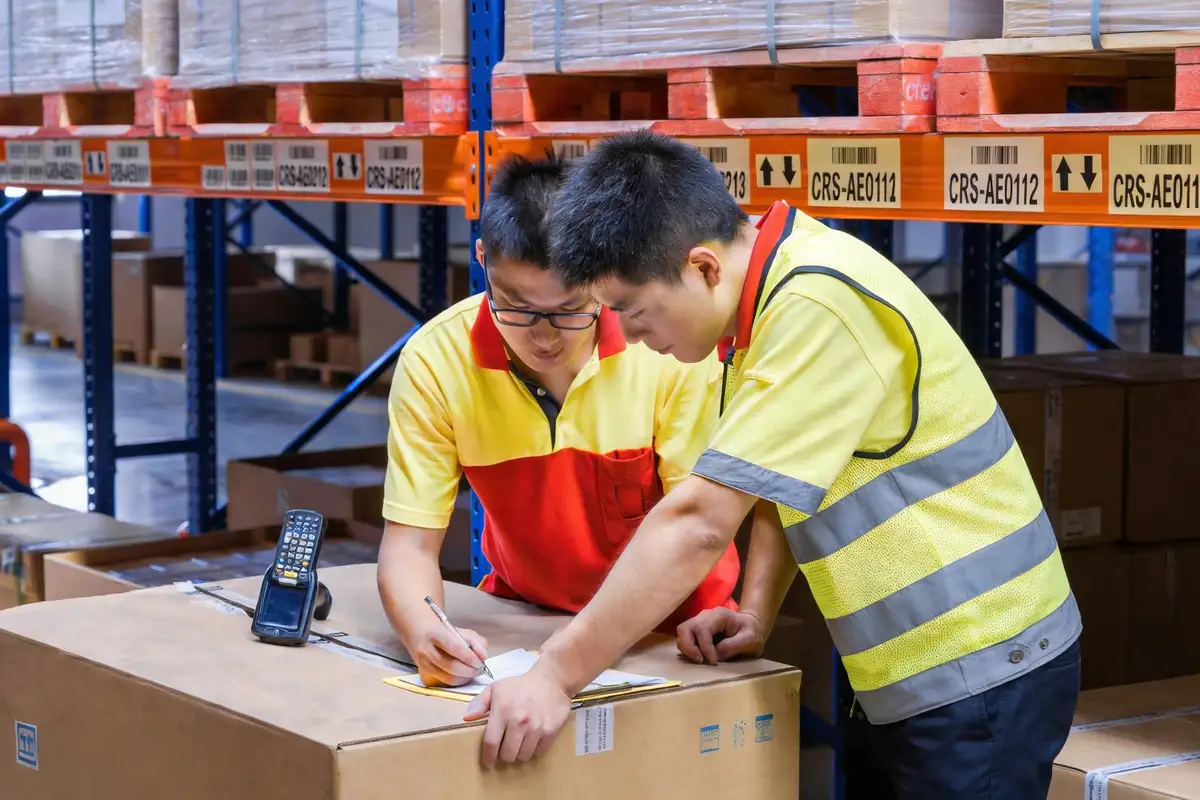
For foreign brands, "build a warehouse in China or outsource it?" is an unavoidable question. Build your own, and you face heavy investment plus fire-safety approvals, business licenses, and labor compliance. Outsource, and you worry about whether the provider is reliable. Let's settle the decision once and for all.
International Customer Scenarios: Three Ways to Stock Goods in China
- Transit/transshipment warehousing: goods enter through Chinese ports, are held and consolidated in a transit warehouse, then forwarded to markets across the region
- Import stocking warehouse: cleared goods are held locally to support sales on Tmall, JD.com, and other platforms
- Temporary storage: day-billed short-term storage for trade-show samples, equipment, and spare parts — cleared when done
Whichever model you choose, the cost math below gets you halfway to the right decision.
1. The Cost Math: Build vs. Outsource
Cost of Owning a Warehouse (example: 5,000㎡ in Shanghai)
One-time investment:
| Item | Cost | Notes | |------|------|-------| | Rent / construction | RMB 600,000–800,000/yr | Buying land and building is out of reach for most companies | | Racking & equipment | RMB 500,000–800,000 | High-bay racking, forklifts, pallets | | Sorting equipment | RMB 300,000–500,000 | Conveyors, PDAs, printers | | WMS system | RMB 100,000–500,000 | Depends on functionality | | Fit-out | RMB 200,000–300,000 | Fire protection, CCTV, flooring | | Total | RMB 1.1–2.1 million | Before a single salary |
Annual operating cost: rent RMB 600,000–800,000 + payroll RMB 800,000–1.2 million + utilities and property 100,000–150,000 + equipment depreciation 150,000–200,000 + system maintenance 50,000–100,000 + consumables and courier 300,000–500,000 = RMB 2.0–2.95 million per year — RMB 160,000–250,000 of fixed monthly spending.
Cost of Outsourcing
| Item | Charging basis | Reference at 5,000 orders/month | |------|---------------|-------------------------------| | Storage | By area / pallet | RMB 15,000–30,000/mo | | Handling | By order / piece | RMB 20,000–50,000/mo | | Courier | By order volume | RMB 15,000–40,000/mo | | System | Free / monthly | RMB 0–2,000/mo | | Annual total | | RMB 600,000–1.46 million |
Bottom line: at low-to-mid volume (up to about 200 orders/day), outsourcing is 50%+ cheaper than building.
2. Why International Customers Should Outsource First
- Regulatory barriers: fire-safety approval, business licensing, social insurance, and invoicing all require local experience
- No local team: customs clearance, WMS integration, and courier negotiations need Chinese-language capability and local relationships
- Focus capital: invest in brand and channel growth, not fixed assets
- Bonded and clearance complexity: import stocking often involves bonded warehousing and "three-document matching" — a specialized provider is far more reliable
3. When Owning Might Make Sense
- Daily volume above 1,000 orders, stable and growing over the next three years
- Goods requiring temperature/humidity control, cold chain, or extreme security
- Extreme inventory control needs: strict confidentiality or heavy in-house kitting
4. The Hybrid Option
- Core self-run + support outsourced: bestsellers in-house, long-tail items outsourced
- Regional split: headquarters warehouse self-run, regional forward warehouses outsourced
- Business split: B2B bulk self-run, B2C e-commerce outsourced
5. Decision Checklist
| Factor | Lean Build | Lean Outsource | |--------|-----------|---------------| | Daily orders | >1,000 | <1,000 | | Order stability | Stable | Volatile | | Product specialness | High | Standard | | Warehousing core to business | Core | Non-core | | Local team in China | Yes | No |
Scoring: 1 point per match; pick the higher score. Ties — consider the hybrid model.
6. Outsourcing Pitfalls to Avoid
- Inspect on-site: check cleanliness, product placement, and equipment; ask about inventory accuracy and shipment lead time
- Put it in the contract: SLA lead times, loss compensation, price-change notice period, exit terms, and data handover
- Pilot small: test with 10%–20% of orders for 1–2 months before migrating everything
- Integrate data: demand real-time inventory sync and API integration, not Excel transfers
7. What Rundong Can Do for You
✅ 50,000+㎡ smart warehousing: five warehouses across Shanghai Jiading and Guangzhou
✅ 12 years of experience: 200+ corporate clients, including 3M, BASF, and CNAF
✅ Free WMS integrated with major e-commerce platforms; 99.99% inventory accuracy; full compensation for lost items
✅ Elastic expansion: add space in peak seasons, reduce in slow ones — no relocating
✅ Integrated fulfillment: warehousing + customs clearance + domestic delivery in one stop
💡 Free warehousing diagnostic: we calculate whether building or outsourcing is cheaper for your situation and optimize your current process.
Rundong Supply Chain serves many international clients with one-stop China services: transit warehousing, temporary storage, customs clearance, and domestic logistics. Contact: +86-21-5918-5706 / shrdwl010@shrdwl.cn