How to Choose a Cloud Warehouse in China: 10 Selection Criteria for International Sellers
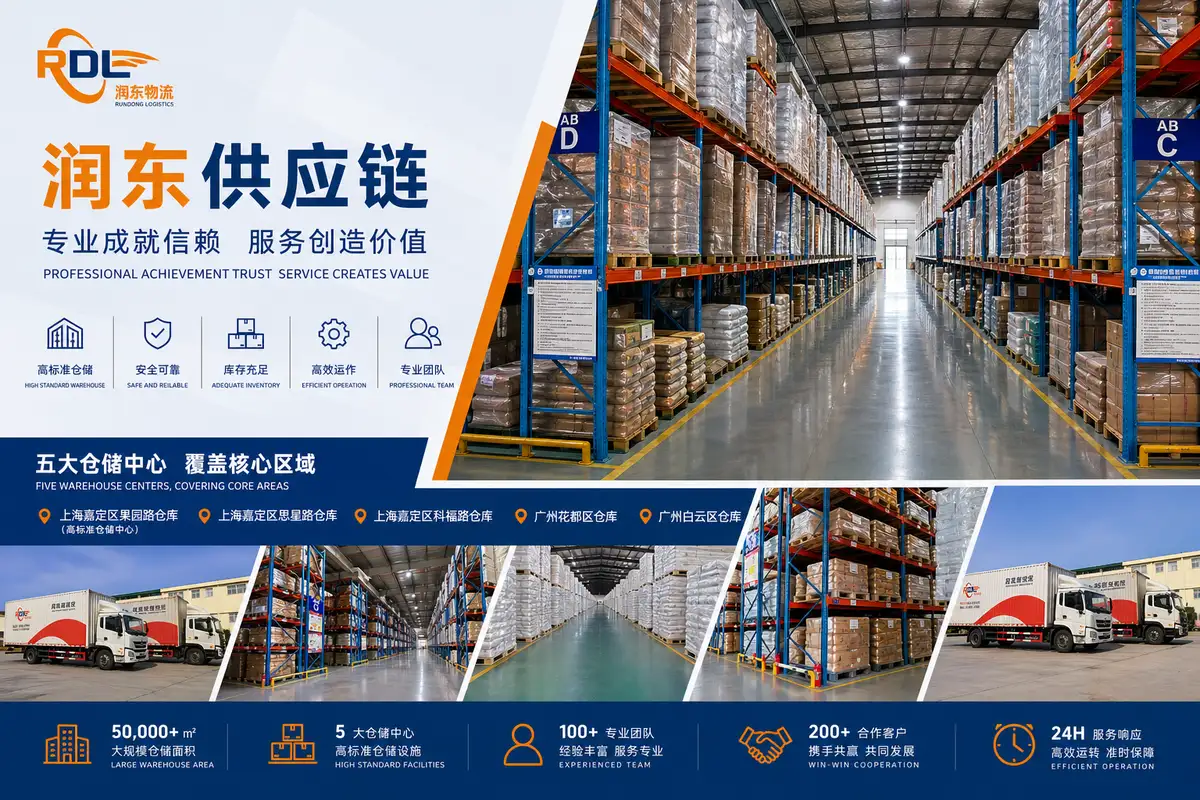
If you are selling to consumers in China, choosing the right warehouse is half the battle. But for overseas brands and cross-border sellers, "choosing a warehouse" is a very different exercise than it is for domestic sellers: your goods must first be imported, cleared through customs, placed into marketplace warehouses, and then survive the Singles' Day order surge.
China cloud warehouses quote anywhere from RMB 3 to RMB 10 per order, and every one of them sounds highly professional. How do you pick one that can genuinely handle imported goods and deliver on its promises? These are the ten criteria Rundong has refined over 12 years serving 200+ international clients such as 3M and BASF.
1. Know How Your Goods Enter China Before You Choose
There are three mainstream models for bringing goods into China, and your warehouse choice depends on which one you use:
| Model | Best for | Key considerations | |-------|----------|--------------------| | General trade import | Brands importing in bulk | Requires customs clearance capability; higher duties, longer lead times | | Bonded stock (cross-border model 1210) | Tmall Global / JD Worldwide sellers | Goods enter a bonded warehouse; duty is paid after sale, reducing capital lock-up | | Direct mail (cross-border model 9610) | Small-batch trials | Slower delivery; suits low-value items |
Most international clients follow this path: ocean or air freight to port → customs clearance → cloud warehouse → marketplace warehouse or direct delivery to consumers. The warehouse sits in the middle of the chain — choose the wrong one and the whole chain suffers.
2. Check Licenses: Bonded vs. General Trade
- Bonded model: confirm the warehouse holds bonded qualifications and can support "enter the zone first, clear later, pay duty after sale"
- General trade: confirm there is a dedicated imported-goods storage area, segregated from domestic goods
- A "cloud warehouse" without these qualifications can only handle the domestic leg, forcing you to add a second service provider and doubling the risk
3. Assess Customs Clearance Capability
Import warehousing is not just about moving boxes; it is about paperwork:
✅ Agent customs declaration, inspection, and duty payment
✅ Familiarity with AEO certification and HS code classification
✅ Experience with IPR customs filing and CCC-certified products
✅ Ability to handle exceptions: bonded-to-general-trade conversion, re-export, and destruction
4. Verify Marketplace Onboarding Experience
Tmall Global, JD Worldwide, and Douyin each have their own onboarding rules:
- Has the warehouse onboarded your target marketplace? Does it know the barcode, shelf-life, and packaging requirements?
- Does its WMS integrate with the marketplace for real-time inventory sync and oversell blocking?
- Does it support multi-channel inventory sharing (marketplace warehouse + own cloud warehouse + drop shipping)?
5. Location: Close to the Port, Closer to the Consumer
- Yangtze Delta sellers: choose Shanghai — port resources such as Yangshan and Waigaoqiao are concentrated here, and nationwide shipping averages around RMB 4 per parcel, with next-day delivery to Jiangsu, Zhejiang, and Shanghai
- Pearl River Delta sellers: choose Guangzhou, close to Nansha and Yantian ports, with lower labor and rent costs
- Multi-warehouse layout: once daily orders exceed 500, consider splitting between East and South China for nearby delivery
6. Price: Ask About the Full Import Cost Structure
| Cost item | Questions you must ask | |-----------|------------------------| | Storage | Charged by area or by pallet? Any rent incentives in the bonded zone? | | Handling | How are inbound and outbound charged? Extra for multi-SKU, labeling, or relabeling? | | Clearance | Does the fee cover declaration and inspection? How are re-exports charged? | | Shipping | Packaging included? How are overweight and remote-area parcels charged? |
If one quote is more than 20% lower than another in the same region, be suspicious: the real cost is usually hidden in handling fees, consumables, and returns.
7. Systems: Integration Is a Hard Requirement
✅ Automatic integration with Tmall Global, JD Worldwide, and Douyin — orders download and tracking numbers upload automatically
✅ Bonded and general-trade inventory managed in separate ledgers, with batch and shelf-life tracking
✅ API access for your overseas ERP/OMS, with multi-warehouse, multi-channel reporting
✅ Customer self-service order tracking with real-time inventory and logistics visibility
8. Peak-Season Flexibility: Can It Absorb an Import Boom?
- Can the warehouse expand space and staff for promotions? Does the bonded model require locking in capacity a month ahead?
- Are you billed by actual volume in the off-season, or forced to rent the whole year?
- Are there backup labor and backup space for extreme situations?
9. Industry Expertise and References
- Has it served international brands in your category? Does it handle shelf-life management for imported beauty, 3C, or food?
- Are its clients similar in scale to you, and how long has it served them?
- Can it handle international-client realities: time-zone differences, English documents, and cross-border settlement?
10. Service Commitments in Writing
- What inventory accuracy does it commit to — 99.5% or 99.9%? How are losses compensated?
- What is the shipping cutoff — orders before what time ship the same day? What compensation applies when late?
- What is the pick-error rate, and does it bear the round-trip freight on errors?
- What is the clearance turnaround once documents are complete?
💡 Rundong Cloud Warehouse — Your China Warehouse Manager
✅ Five warehouses in Shanghai and Guangzhou totaling 50,000+ m², supporting both bonded and general trade
✅ One-stop warehousing, customs clearance, and nationwide delivery for 200+ international corporate clients
✅ Integration with Tmall Global / JD Worldwide / Douyin, 99.95% inventory accuracy
✅ 3x peak-season staffing and flexible expansion — no overflow, no price hikes
Rundong Supply Chain serves numerous international clients, offering one-stop China transshipment warehousing, temporary storage, customs clearance, and domestic logistics. Contact: +86-21-5918-5706 / shrdwl010@shrdwl.cn