Peak Season Warehousing Playbook for International Brands: Singles' Day and 618
Singles' Day (11.11) generates hundreds of billions of RMB in a single day, with the 618 festival close behind. China's mega-sales events are the most important selling windows of the year for international brands — and the easiest moment to fail.
For overseas brands, a peak-season failure costs far more than it does for domestic sellers: stock still at sea means you miss the inbound window and the entire campaign produces nothing; a few days of customs delay turns bestsellers into out-of-stock items; and marketplace fines, bad reviews, and returns are far harder to manage from the other side of the world. Getting your goods into a China warehouse in advance is the first prerequisite for peak-season success.
1. The International Client Scenario: Pre-Position Stock in China Before the Event
Cross-border stock planning follows a very different timeline from domestic planning. The core principle is to build in clearance slack:
| Step | General trade | Bonded stock (model 1210) | |------|---------------|---------------------------| | Ocean freight to port | 15-30 days | 15-30 days | | Air freight to port | 7-15 days | 7-15 days | | Customs release | 3-10 business days | Enter zone first; duty paid after sale | | Marketplace inbound | 2-4 weeks ahead | 2-4 weeks ahead |
Rule of thumb: working back from the event date, stock placement must start at transport time + clearance time + inbound time + 2 weeks of buffer. Better early than late — bonded goods can enter the zone ahead of the event and sit there until demand kicks in.
2. Three Months Out: Forecast, Stock, and Lock in Capacity
Forecast Three Scenarios
- Conservative: the safe baseline volume
- Normal: the most likely volume
- Worst case: the upper limit if the event explodes
Our practice: stock 1.5x the worst-case forecast. Cross-border replenishment takes too long to gamble on — better to overstock and sell through slowly than to run out mid-event. One stockout damages your ranking and reputation.
Lock in Capacity and Labor Early
- Bonded stock: confirm warehouse capacity quotas and inbound schedules with your cloud warehouse 1-2 months ahead
- Temporary labor: sign agreements with staffing agencies in advance — hiring the week before Singles' Day doubles the price, and nobody shows up
- Expansion: have temporary space ready a month ahead; test conveyors and racking beforehand
3. One Month Out: Systems and Inventory
Stress-Test Your Systems
- Simulate peak-season traffic and test how many orders the system can process per second
- Test oversell blocking, wave picking, and inventory sync
- Require the software vendor to be on site or on 7x24 standby during the event
Take Full Inventory
- Do a full count before the event; accuracy must be 99.9% or better, and 100% for bestsellers
- Remove near-expiry and damaged goods in advance — shelf-life discipline matters even more for imported goods
- Freeze inventory after the count; nothing moves except shipments
Pre-Pack
- Pre-pack bestsellers and fixed-bundle orders and stage them in the dispatch zone
- Pre-apply gift items and platform-required labels
- For Singles' Day we pre-packed 200,000 orders and shipped them all by noon on day one — two days faster than the market
4. Two Weeks Out: Processes and the Floor
- Break SOPs down to every step: how to pick, how to handle exceptions, and who to call, so no one has to think mid-crisis
- Optimize the floor: bestsellers nearest the packing zone, aisles cleared, and picking/packing/shipping flows kept separate
- Check equipment: PDAs, printers (two backups), scanners, a 4G backup router, and emergency lighting
5. Three Days Out: Final Sprint
- Kickoff meeting: goals, discipline, incentives, and role assignments
- Run 100 test orders through the full flow and test carrier integration and label printing
- Confirm carrier vehicles and staff, and stock up on meals, drinks, rest areas, and first-aid supplies
6. During the Event: Execution and Contingencies
- Day one, watch four things: systems (are orders downloading?), inventory (any overselling?), throughput (hourly output vs. plan), and exceptions (pick errors)
- The first 1,000 orders matter most: if they flow, the rest follows; if they fail, stop, investigate, and only then resume
- Report progress every 2 hours and hold a daily standup; if a carrier picks up but tracking stalls, switch to the backup carrier immediately
| Sudden problem | Response | |----------------|----------| | System down | Switch to the backup server and print orders manually | | Stock running out | Replenish from domestic stock plus express air from HQ; adjust listings meanwhile | | Customs inspection triggered | Cooperate with inspection; re-allocate other SKUs from the bonded warehouse | | Labor shortage | Deploy the pre-contracted backup workforce |
7. After the Event: Wrap-Up and Review
- Count and re-slot remaining stock; process returns promptly instead of letting them pile up
- Review four questions: how far off target, which step was slowest, what went wrong, and how to avoid it next time
- We hold a three-day review after every peak season, going through each link one by one
8. Rundong Peak-Season Support Services
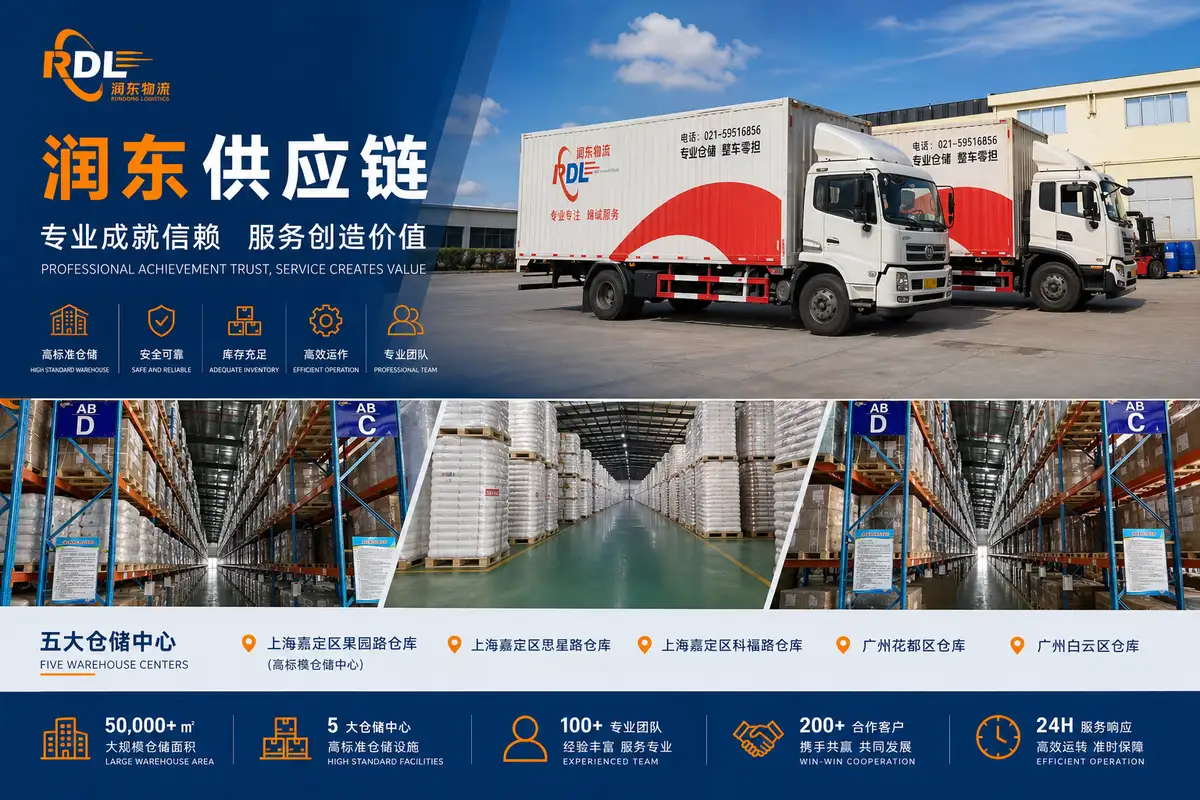
✅ 50,000+ m² flexible capacity supporting both bonded and general trade — no need to move warehouses for the event
✅ 3x staffing reserve with long-term agreements across three staffing agencies
✅ Dedicated WMS peak-season support with the software vendor on site, 7x24
✅ Direct contracts with major carrier headquarters — priority dispatch, no price hikes
✅ Track record: 150,000 orders shipped in a single Singles' Day, all delivered within 72 hours
Rundong Supply Chain serves numerous international clients, offering one-stop China transshipment warehousing, temporary storage, customs clearance, and domestic logistics. Contact: +86-21-5918-5706 / shrdwl010@shrdwl.cn