Pallet Racking vs. Flat Warehouse: A Guide for International Clients in China
Importers choosing warehousing in China often face the same question: rent a pallet-racking (high-bay) warehouse or a flat warehouse? Many clients compare only the unit rental rate and assume racking is more expensive; others chase the concept and assume racking is always better. In reality, neither type is inherently superior — the right choice matches your cargo profile, turnover, and budget. This article puts real numbers on the comparison.
The International Client Scenario: What to Consider When Choosing a Warehouse in China
Importers should weigh four factors together when selecting a storage type:
- Cargo profile: full-pallet in/out, or do you need broken-case picking? Are your unit loads standardized?
- Turnover: is inventory stocked in China for the long term, or does it turn over quickly?
- Expiry and batch: food, cosmetics, and similar categories demand strict first-in-first-out (FIFO);
- Cost structure: rent, handling fees, and exit flexibility all belong in the total-cost calculation.
1. The Fundamental Difference Between the Two Types
Flat warehouse: pallets are stacked directly on the floor, typically 3-5 stacks high and 3-5 meters tall, with no racking or only low racks. It is simple, cheap, and low-investment; the downsides are heavily wasted vertical space and the need to rehandle stacks to reach lower pallets.
Racking warehouse (high-bay pallet racking): high-bay racks are installed, typically 6-12 meters, served by forklifts and reach trucks, with an independent slot for every pallet. Space utilization is high, but it requires rack investment and licensed forklift operators.
Automated storage and retrieval system (AS/RS): the next level up — stacker cranes handle all putaway and retrieval automatically in racks 10-30 meters high. Investment starts in the millions of yuan, suitable only for very large, long-term operations. Unless you are running tens of thousands of pallet positions per site, AS/RS is usually out of scope for importers.
In everyday usage, "racking warehouse" (立体仓) means high-bay pallet racking, not a fully automated AS/RS.
2. Space Utilization: Racking Wins Clearly
Using a 1,000 sqm warehouse as an example:
| Warehouse Type | Height | Levels | Pallet Positions | Equivalent Flat Area | |----------------|--------|--------|------------------|----------------------| | Flat warehouse | 4 m | 3 levels | 300 | 1,000 sqm | | Racking | 8 m | 6 levels | 600 | 2,000 sqm | | Racking | 12 m | 9 levels | 900 | 3,000 sqm |
Conclusion: an 8-meter racking warehouse uses space about 2x as efficiently as a flat warehouse; 12-meter racking reaches about 3x. The same cargo needs only one-third of the floor area.
3. Operational Efficiency: Each Has Its Strengths
Flat warehouse: picking requires no climbing and products are easy to spot; but rehandling stacked pallets is laborious, FIFO is hard to enforce, and counting means counting piles.
Racking warehouse: every pallet is accessed independently without disturbing others; FIFO is executed automatically because the WMS tracks batch by slot; counting is clean. The trade-offs: forklift operations are required, aisles consume floor area, and racks block sightlines.
Summary: full-pallet, low-SKU, high-volume-per-batch cargo suits flat warehouses; multi-SKU, broken-case, multi-batch, FIFO-driven cargo suits racking warehouses.
4. Cost Comparison: Total Cost Shows Racking Isn't Necessarily Pricier
Using 900 pallets as an example (rent at typical China market rates):
- A flat warehouse needs about 3,000 sqm at CNY 1/sqm/day — about CNY 90,000 per month;
- Racking needs only about 1,000 sqm at CNY 1.5/sqm/day — about CNY 45,000 per month — rent is roughly cut in half;
- If installing racks yourself: 6-meter racking for 1,000 sqm costs about CNY 150,000-200,000; depreciated over 10 years and offset against rent savings, it pays back within six months.
Conclusion: for large volumes stored long-term, racking has the lower total cost; for small volumes with fast turnaround, a flat warehouse is more flexible and economical.
5. How to Choose?
Choose racking when: many SKUs, broken-case picking needed, multiple batches requiring FIFO, high local rents, and long-term use (3+ years).
Choose a flat warehouse when: few SKUs, full-pallet in/out, very fast turnover (goods never stay overnight), oversized or overweight cargo, short-term leases, or tight upfront budgets.
6. Racking Warehouse: Points to Verify
- Clear height: 6-meter racks require at least 7 meters of clear height; 8-meter racks need at least 9 meters, leaving room for sprinklers and lighting;
- Floor load: fully loaded high-bay racking needs 1+ ton per square meter — get the floor load-bearing capacity in writing;
- Aisle width: at least 3 meters between racks for forklift turning, varying by forklift type;
- Fire compliance: confirm sprinkler coverage and whether in-rack sprinklers are required, to avoid rework after installation;
- FIFO execution: confirm the WMS manages slots by batch — otherwise tall racks can actually hurt expiry management.
Rundong's High-Bay Racking Warehouse
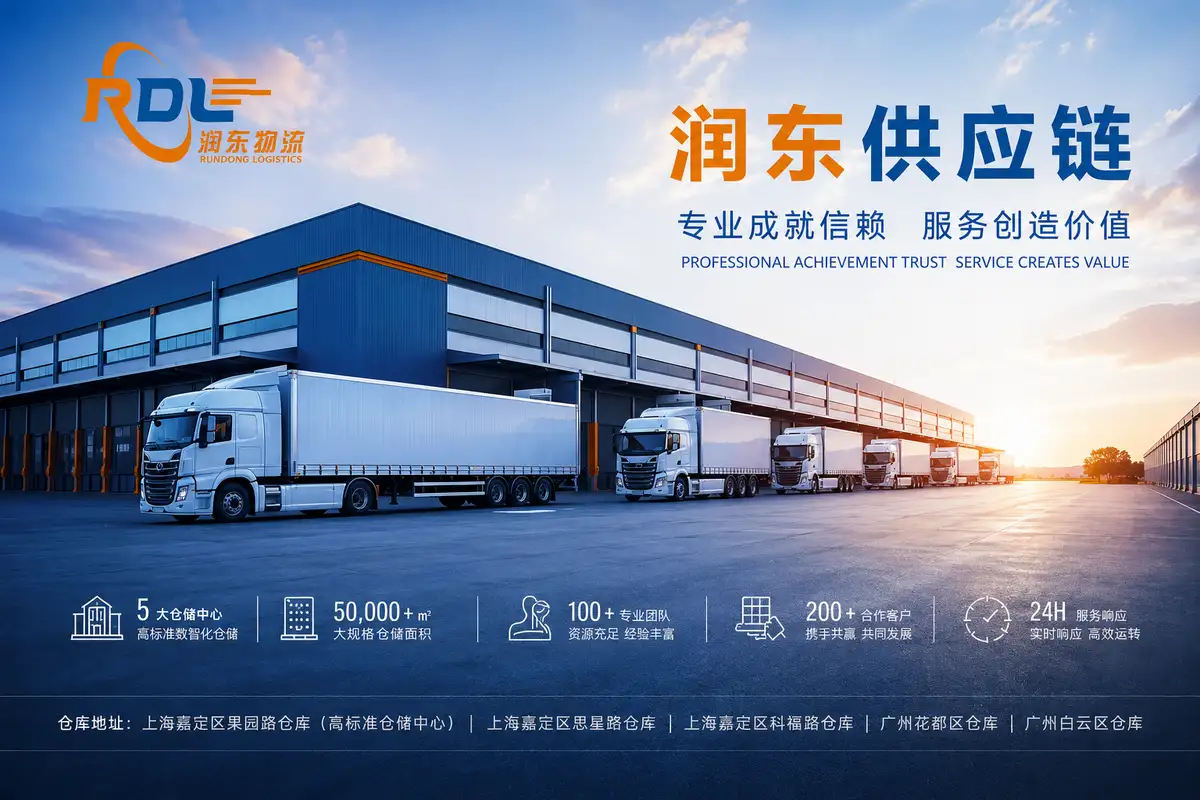
Rundong's 50,000 sqm Class C (Item 2) warehouse in Shanghai's Jiading district offers: 8-meter racks, 12,000 pallet positions, 1.5 tons/sqm floor load, 3.5-meter aisles accommodating counterbalance and reach trucks, full sprinkler coverage, and WMS batch-slot management for FIFO. Clients need no rack investment — move in and store. For 1,000 pallets, the racking solution saves over CNY 100,000 in annual rent versus a flat warehouse.
Rundong Supply Chain serves many international clients (3M, BASF, Rettenmaier, Miwon, bulthaup and more), offering one-stop China transshipment warehousing, temporary storage, customs clearance, and domestic logistics. Contact: +86-21-5918-5706 / shrdwl010@shrdwl.cn