How Third-Party Warehousing Cuts Operating Costs for International Brands in China
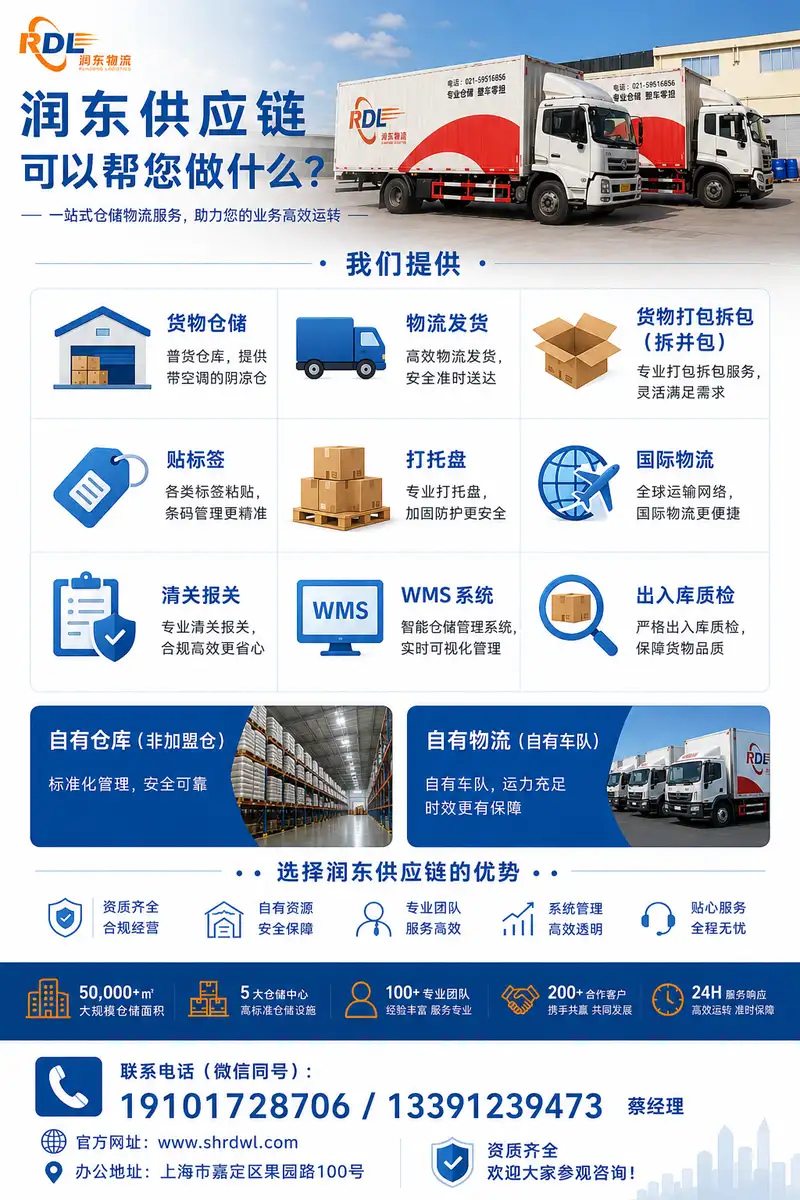
Foreign brands entering China face three questions: where to hold stock, who manages it, and how to deliver to Chinese consumers. Building your own warehouse, hiring a local team, and installing systems is expensive and risky. For most international customers, third-party warehousing has become the standard answer.
Typical Scenarios for International Customers
- First entry into China: ship an initial order into a transit warehouse to test demand before committing to larger replenishments
- Temporary storage after import clearance: hold full containers after customs release, then release in batches to distributors or e-commerce channels
- Domestic delivery to Chinese consumers: pick, pack, and ship from the warehouse as orders arrive on Tmall, JD.com, Douyin, and other platforms
The pay-per-use model of third-party warehousing fits these scenarios naturally: pay less at low volume, scale up as you grow — without heavy asset investment in China.
The Hidden Costs of Owning a Warehouse
Many companies assume building their own warehouse is a one-time fix, but hidden costs are usually underestimated:
- High fixed investment: rent, racking, fire protection, and security systems easily reach hundreds of thousands of RMB
- Heavy labor costs: a mid-size warehouse needs 8–12 staff, plus social insurance and local labor-law compliance
- Large system spend: WMS procurement, deployment, and maintenance start at tens of thousands of RMB per year, plus localization work
- Off-season waste: fixed square footage sits idle in slow months while rent continues
How Third-Party Warehousing Cuts Costs
1. From Fixed Assets to Pay-as-You-Go
No more seven-figure one-time investments. You pay for actual space and handling volume, so costs scale with your business and fall naturally in slow seasons.
2. Professional Teams Replace Self-Built Teams
Rundong's 100+ specialists cover warehouse management, forklift operation, picking, and quality inspection. International clients skip recruiting, training, and managing a local workforce and can reinvest those savings into product and market development.
3. WMS at No Cost
Rundong provides WMS access free of charge: real-time inventory queries, in/out records, and cycle-count reports at the click of a button — no purchase, deployment, or maintenance burden.
4. Scale Economies Cut Handling Costs
Rundong serves 200+ corporate clients, including international names such as 3M and BASF. Courier volume is procured centrally at 30%–50% below market rates, and equipment utilization far exceeds what a single company could achieve on its own.
Real Case: An International Brand's Cost Reduction in China
The brand previously ran its own 2,000㎡ warehouse at about RMB 120,000 per month. After switching to Rundong:
- Space optimized to 1,500㎡ and monthly cost down to RMB 85,000 — a reduction of about 30%
- Inventory accuracy up from 95% to 100%
- Shipment lead time down from 24 hours to 4 hours
- No temporary hiring during peak sales — Rundong reallocates resources as needed
Annual savings: approximately RMB 400,000.
Which International Clients Fit Third-Party Warehousing
- Annual warehousing cost above RMB 500,000, or warehousing above 15% of sales
- Obvious seasonality, such as cross-border e-commerce promotions
- Plans to enter new Chinese regions or channels without building warehouses
- A preference for lean, asset-light China operations focused on brand and sales
Rundong Supply Chain serves many international clients with one-stop China services: transit warehousing, temporary storage, customs clearance, and domestic logistics. Contact: +86-21-5918-5706 / shrdwl010@shrdwl.cn