China Warehouse Fire Safety Compliance: A Guide for International Clients
When you place goods in a Chinese warehouse, fire safety is not "the warehouse's problem" — it is the first line of defense for your cargo assets. China sees multiple warehouse fires every year, with cargo losses routinely reaching tens or even hundreds of millions of yuan. For international clients, imported goods are high-value and slow to replenish: a warehouse fire destroys not only the goods but also your market window. That is why fire compliance should stand alongside price as a top-priority, non-negotiable criterion when evaluating a Chinese 3PL.
The International Client Scenario: Why Fire Compliance Is a Hard Requirement
- High-value cargo cannot absorb a loss: imported goods are usually high-value (appliances, food, cosmetics, building materials), with a single pallet worth tens of thousands to hundreds of thousands of yuan.
- Insurance terms require it: international cargo and warehouse insurance is typically underwritten on the condition that the warehouse complies with local fire regulations and holds a fire-safety acceptance certificate.
- Compliance is auditable: fire acceptance documents, equipment maintenance records, and training/drill logs are all obtainable in writing — verifiable from overseas.
- Consequences are severe: under China's Fire Protection Law, individuals directly responsible for fires causing major losses can face criminal liability — which is exactly why reputable warehouses take it seriously.
1. China's Fire Hazard Classifications for Warehouses
Under China's Code for Fire Protection Design of Buildings, warehouse contents are classified into five hazard categories:
| Class | Description | Typical Cargo | Fire Requirements | |-------|-------------|---------------|-------------------| | A | Flammable/explosive | Gasoline, alcohol, fireworks | Highest: explosion-proof, pressure relief, isolation | | B | Flammable | Kerosene, oxygen cylinders, paint | High: fire and explosion protection | | C | Combustible (items 1 & 2) | Apparel, appliances, paper goods, food | Moderate: standard fire systems | | D | Difficult to ignite | Steel, glass | Lower | | E | Non-combustible | Stone, ceramics | Minimum |
Key point: the overwhelming majority of general consumer goods warehouses are Class C, Item 2 (combustible solids). Import brands should specify the required fire class in the contract and demand the fire-safety acceptance certificate.
2. Facility Standards for Class C (Item 2) Warehouses
| Facility | Standard Requirement | |----------|----------------------| | Fire hydrants | Coverage within 50 m radius, adequate water pressure | | Extinguishers | One 4 kg dry powder unit per 50 sqm | | Smoke detectors | Full coverage, including every compartment | | Automatic sprinklers | Full coverage; in-rack sprinklers to be assessed for high racks | | Emergency lighting | All aisles; stays lit 90 minutes after power loss | | Exit signage | Glowing directional signs on all aisles | | Fire doors | Self-closing fire doors between fire zones | | Fire lanes | Main aisles at least 4 m clear width, no storage |
3. Core Daily Fire Management Requirements
- No smoking: smoking is absolutely prohibited inside the warehouse; signs at all entrances.
- Electrical safety: wiring must be run in conduit; no daisy-chained power strips; power off after hours (except security and fire systems).
- Clear access: nothing within 1.5 m of hydrants or extinguishers.
- Stacking limits: stacks at least 0.5 m from ceilings and light fixtures, with 0.5 m spacing between stacks.
- Hot-work permits: welding and cutting require a permit, dedicated supervision, and a 30-minute post-work inspection.
- Charging control: no charging of electric forklifts or e-bikes inside the warehouse; charging areas must maintain safe distance from the building.
- Hazardous goods segregation: alcohol, gasoline, and other flammables must never be mixed with general cargo.
- Routine maintenance: extinguisher pressure checked monthly; smoke/sprinkler systems tested quarterly; emergency lights tested monthly.
- Training and drills: company-wide fire training quarterly, drills semi-annually.
- End-of-day checks: designated staff verify power-off and hazards before closing each day.
4. Remote Fire-Compliance Verification Checklist for International Clients
- Request and verify the fire-safety acceptance certificate (the statutory document confirming the building passed fire inspection).
- Ask for the last 12 months of equipment maintenance records and drill logs.
- Do a video walkthrough: check that aisles are clear, extinguisher gauges are in the green zone, and emergency lights are working.
- Put it in the contract: the warehouse operator is responsible for compliant fire operations and bears compensation for cargo losses caused by fire.
5. Penalty Standards Under Current Chinese Rules
| Violation | Penalty | |-----------|---------| | Blocked fire lanes | Rectification order, fine of CNY 5,000-50,000 | | Inoperative or expired fire equipment | Rectification order, fine of CNY 5,000-50,000 | | Improper wiring / illegal electrical use | Rectification order, fine of CNY 5,000-50,000 | | No training or drills conducted | Rectification order, fine of CNY 5,000-50,000 | | Fire causing major losses | Criminal liability for responsible persons |
Rundong's Fire Management System
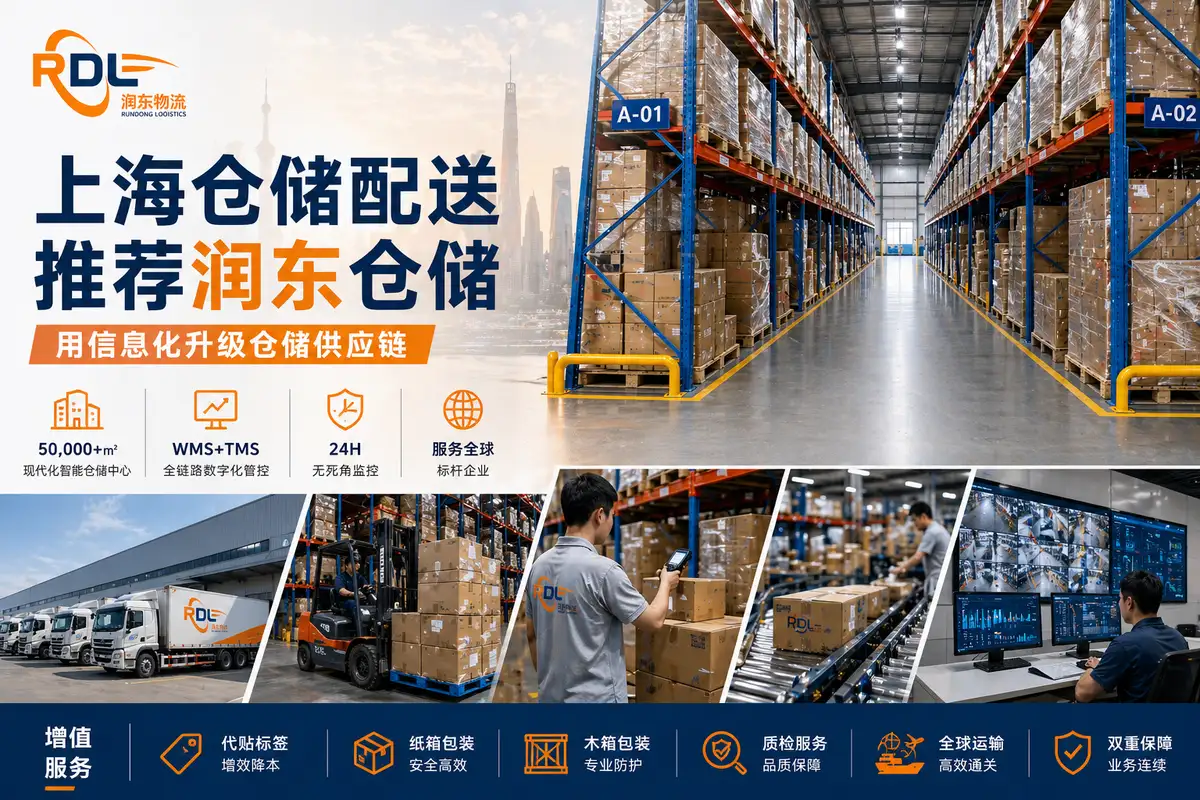
Rundong's 50,000 sqm warehouses in Shanghai's Jiading district meet Class C (Item 2) standards: full sprinkler, smoke detector, and hydrant coverage; 24/7 surveillance with no blind spots and round-the-clock security; daily end-of-day fire checks, monthly equipment maintenance, quarterly training, and semi-annual drills; fire lanes kept permanently clear. Since establishment, Rundong has maintained zero major incidents year after year, providing reliable protection for international clients' cargo.
Rundong Supply Chain serves many international clients (3M, BASF, Rettenmaier, Miwon, bulthaup and more), offering one-stop China transshipment warehousing, temporary storage, customs clearance, and domestic logistics. Contact: +86-21-5918-5706 / shrdwl010@shrdwl.cn