How to Lease a Warehouse in China Without Getting Burned: A Guide for International Companies
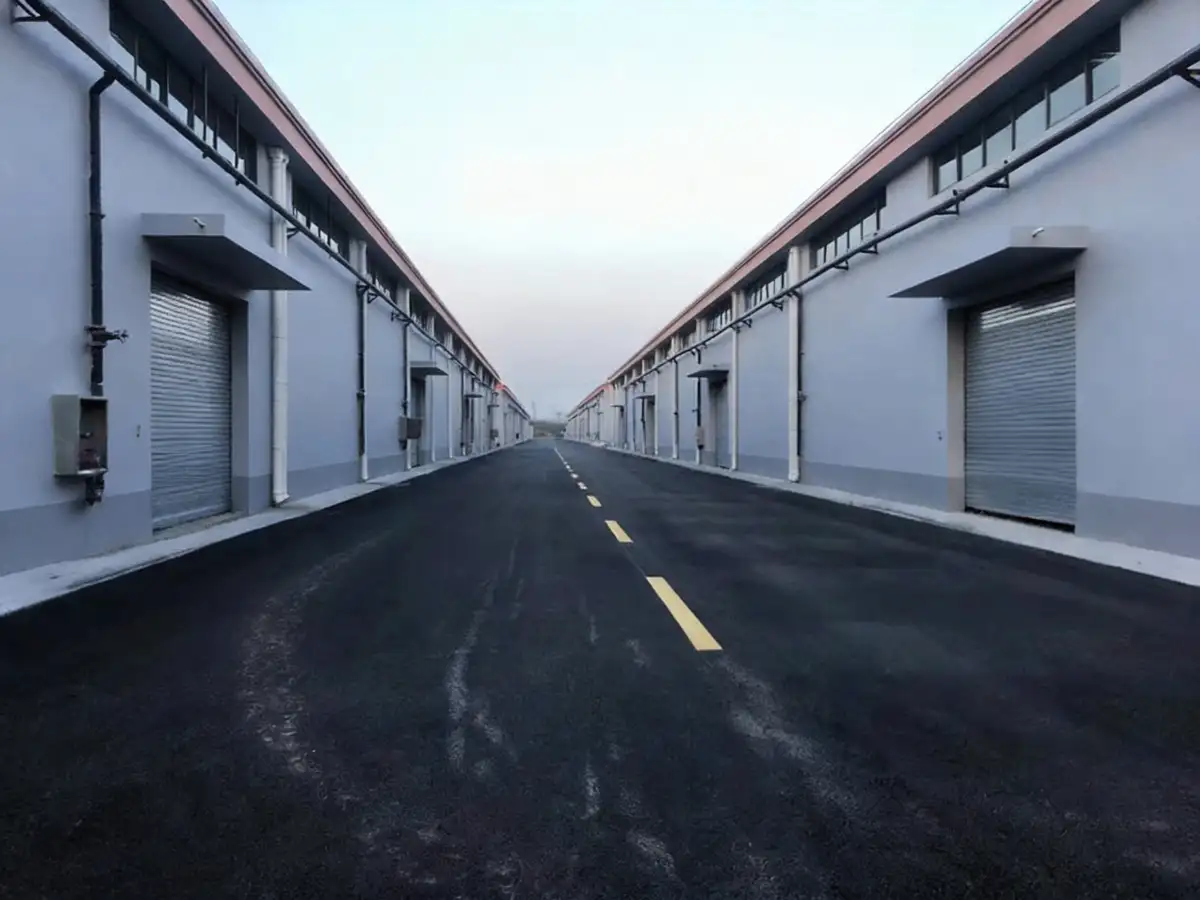
Leasing a warehouse in China looks simple — but the traps are many. Told a 17-meter truck could enter, only to find a height limit at the gate. Signed a 3-year lease, and the landlord announced demolition after year one. Rain leaked through the roof and ruined the stock — the landlord refused to help. This guide covers everything you need to check.
International Scenarios: Who Needs a Warehouse in China
- Temporary storage after import clearance: short-term holding of containers awaiting staged clearance or forwarding
- Local stocking: long-term warehousing supporting domestic e-commerce and distributors
- Transit handling: safe, compliant temporary storage for goods transiting Chinese ports
Many international clients hand the entire "lease" task to a professional operator like Rundong — sourcing, contracting, and running the facility, removing language and regulatory risk.
1. First, Calculate How Much Space You Need
- Estimate: pallet count × 1.2㎡/pallet (including 20% aisles); 100 pallets stacked 4 high ≈ 120㎡
- Add a 10%–20% buffer for peak season
- Example: 200 pallets at 4 high need 200 × 1.2 × 1.2 ≈ 290㎡ — rent about 300㎡
2. Warehouse Types and Prices (RMB/㎡/day)
| Type | Price | Best for | |------|-------|----------| | General flat warehouse | 1.5–2.5 | Bulky, heavy goods | | High-dock racked warehouse | 2.5–4 | E-commerce, FMCG, standard goods | | Temperature controlled | 4–8 | Food, pharma, wine | | Cold storage | 8–20 | Fresh, frozen food | | Bonded warehouse | 5–10 | Cross-border e-commerce, imported goods |
Location priorities: near courier sorting hubs, near highway exits, accessible to 17-meter trucks, no daytime truck restrictions.
3. The 10-Point On-Site Inspection
- Access: gate width, height limits, restrictions — can a 17-meter truck enter and turn around?
- Site: floor elevation, drainage, signs of roof leaks
- Fire safety: approval certificate, Class C2 vs. D rating, working sprinklers and smoke detectors
- Utilities: three-phase power capacity, electricity price (beware RMB 1.5/kWh vs. market ~RMB 0.8), separate meters
- Structure: load-bearing capacity, column spacing, roof construction
- Security: 24/7 guards, CCTV coverage and retention, access control
- Surroundings: pollution sources, noise, worker availability nearby
- Property management: repair response, reputation, other tenants
- Paperwork: property title, business registration/fire filing feasibility, demolition plans
- Contract: term, deposit, annual rent cap, demolition compensation, force majeure
4. Negotiation Tactics
- Ask the price for a large area first, then a small one, to learn the unit rate
- Compare total cost, not unit price: add property fees and electricity markups
- A 3-year lease typically saves 10%–20%; 5 years saves 20%–30% plus 1–2 months of fit-out time free
- Negotiate at least 1 month rent-free for fit-out; 2–3 months for large spaces
5. Five Clauses the Contract Must Have
- Demolition clause: advance notice period, compensation for fit-out and relocation, business-interruption loss
- Maintenance responsibility: who fixes roof leaks and utility failures, how fast, and who pays for resulting damage
- Rent increase: annual cap, advance notice, and both parties' consent
- Exit terms: early-termination penalty cap, sublease rights, deposit refund timeline
- Written promises: "17-meter truck access," "business registration," "fire approval" — verbal promises are worthless unless written into the contract
6. Four Classic Traps
Trap 1 — Subleasing: sign with a sublessor without seeing the title, and when the head landlord reclaims the building, your deposit and fit-out vanish. → Contract with the titleholder directly, or demand proof the head landlord consents to the sublease. Trap 2 — Demolition: the landlord rents knowing demolition is planned, and the contract is silent on compensation. → Check planning records; write compensation into the contract. Trap 3 — Fire safety: "no problem" turns out to mean no approval, and you get sealed and fined. → Ask for the approval certificate and make the landlord liable for non-compliance. Trap 4 — Fee creep: property and electricity rates rise after move-in. → Lock every unit price into the contract with both-party consent for changes.
7. The Easier Route: Let a Professional Operate It
Rather than taking the lease risk yourself, consider Rundong: five warehouses in Shanghai Jiading and Guangzhou totaling 50,000+㎡, proper title, Class C2 fire rating, and 17-meter truck access; transparent pricing with no hidden fees, standardized contracts, and property repairs answered within 24 hours; 6S management and 24/7 security, serving 200+ corporate clients including 3M and BASF.
Rundong Supply Chain serves many international clients with one-stop China services: transit warehousing, temporary storage, customs clearance, and domestic logistics. Contact: +86-21-5918-5706 / shrdwl010@shrdwl.cn